Character direction
A CHARACTER WORTH COMING BACK TO
Build a recognizable character with a clear silhouette, a few constants, and room to surprise you.
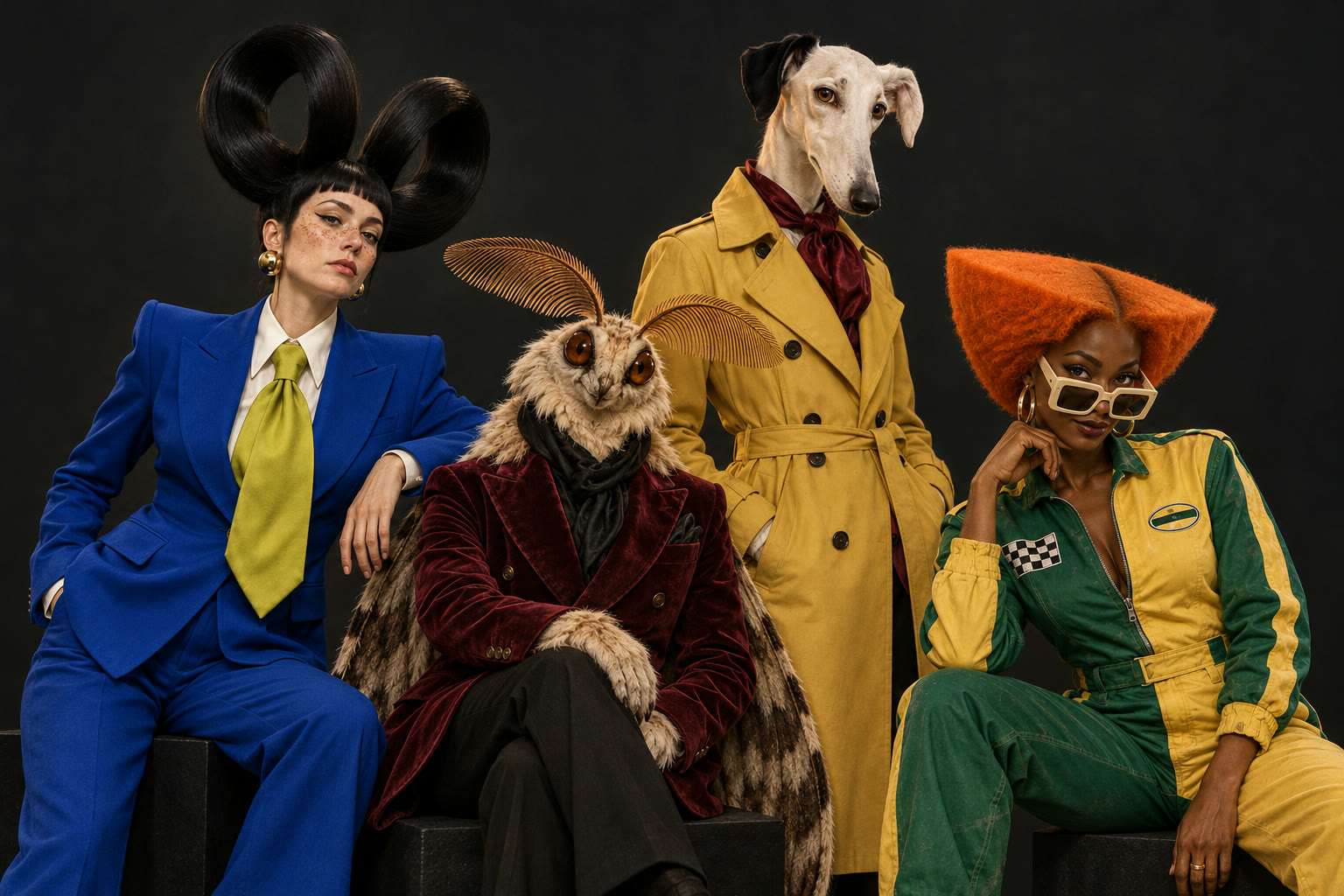
A character needs something you recognize before you read the caption. Start with the silhouette. Give them a few details that survive a change of scene. Then let them do something unexpected.
Choose what stays the same
Mallow is an ivory moth with amber eyes and extravagant antennae. The burgundy velvet jacket helps, but the identity should still read if the jacket changes. A useful character brief separates physical identity from wardrobe and setting.
Write three short lists: the details that define the character, the things they usually wear, and the things you are free to change. This gives each new scene a starting point without making every scene identical.
Make a reference you actually approve
In Studio, begin with a description or reference photo, then review the character references before using them for more work. Look closely at the face, proportions and distinctive details. A reference with an error can carry that error into later generations.
Keep approved references together. Save useful outfits and props separately so a wardrobe choice does not become an accidental part of the character’s anatomy.
Give them something ordinary to do
The character can be extraordinary. The situation does not have to be. A moth doing laundry or a greyhound clocking out of an office gives the audience something familiar to read immediately.
Choose one clear action for the first clip. A complicated costume, a busy location, multiple props and a fast camera move all compete for attention. You can add complexity after the basic idea works.
Review continuity, not just the best frame
Watch the whole output. Check the face as it turns, the hands near objects, and the way clothing behaves during movement. Approved references guide a generation; they do not guarantee that every frame will match.
Save the versions you would happily build on. A small collection of strong, consistent choices is a better foundation for the next scene than a large collection you have not reviewed.